
According to statistical data, more than 56% of business-to-business organizations invest in digital marketing to stay ahead of their competitors. Learn all about how digital marketing works for a B2B company.
What Makes B2B Digital Marketing Unique?
Longer Sales Cycles: B2B sales cycles are typically longer, averaging 200 days, which necessitates consistent and repeated contact to establish trust among potential customers.
Multiple Decision-Makers: Typically, decision-makers comprise a committee of stakeholders rather than a single individual. Marketing messages must be both appealing and logical, and the business requires a variety of roles.
High-Value, Trust-Based Purchases:- The primary focus of B2B digital marketing is to address business challenges while enhancing operational efficiency. Generally, purchases are driven by logic, data, and ROI and not by emotion or impulse. High-value purchases are made since the marketing type targets businesses or professionals, whereas B2C marketing targets individual consumers only.
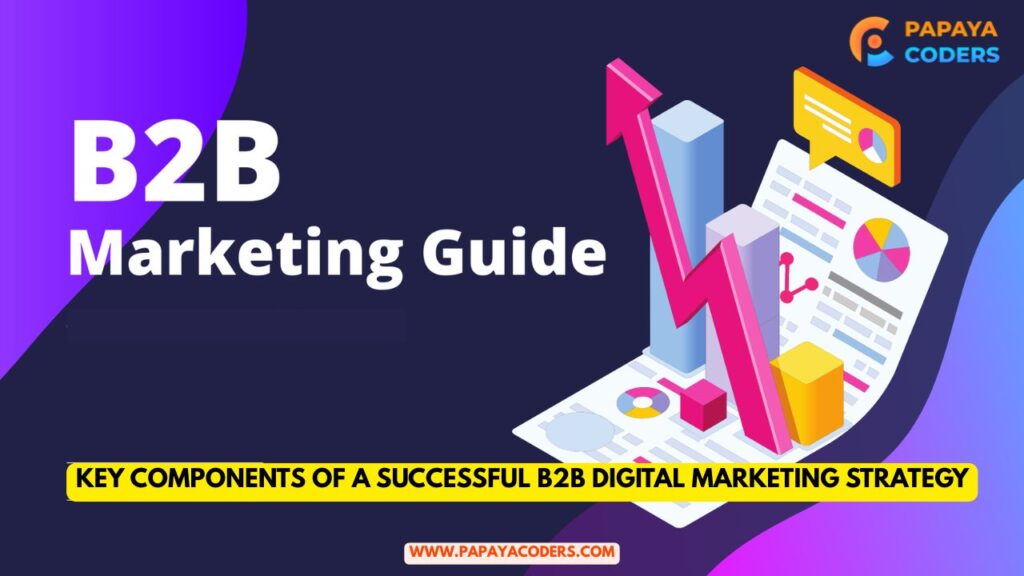
Key Components of a Successful B2B Digital Marketing Strategy
SEO and Organic Search Visibility. An individual is required to optimize content and a website to rank higher in the search engine results page, where potential clients are looking for products and services that your business provides.
Content Marketing (Blogs, Guides, Whitepapers) One is required to create and share valuable and informative content, such as papers, case studies, so that potential clients can obtain the information they are looking for. If you have high-quality content on your website, it shows your expertise to others.
LinkedIn & Professional Social Media Marketing: Utilize platforms like LinkedIn to connect with professionals and establish brand awareness. The social media platform LinkedIn is highly effective in reaching business decision makers.
ABM landing pages are hyper-personalized pages created for each target account, delivering customized value, clear CTAs, and actionable solutions to drive trust, engagement, and high-intent conversions.
Email Marketing & Lead Nurturing. With the help of targeted email campaigns, leads can be nurtured, providing value and keeping your company top of mind throughout the long sales cycles.
Paid Ads (Google Ads, LinkedIn Ads). If your budget allows, consider a PPC campaign. The benefits of SEO, content, and social media marketing are that they are free of cost, and you can do them if you have the talent for it. But to get instant desired results, you need to consider paid ads.
Website Optimisation in ABM involves tailoring site content, messaging, and user experience to specific target accounts, ensuring relevance, enhancing engagement, increasing time spent on site, and boosting overall conversion rates.
How B2B Lead Generation Works
B2B lead generation is the process of attracting businesses (not people) and converting them into potential customers. It works through these specific steps:
- To capture the attention of professionals researching solutions in the online world, SEO, content, and social media are among the primary platforms.
- Create a detailed profile of your perfect customer to focus your marketing and sales efforts.
- Utilize channels such as SEO, content marketing, LinkedIn, paid ads, cold outreach, and webinars to drive business into your funnel.
- Convert visitors into leads through contact forms, landing pages, lead magnets (ebooks, audits), or sign-ups.
- Sales or automation tools check which leads are appropriate (budget, authority, need, timeline).
- Send personalized emails, content, and follow-ups to build trust and bring leads closer to making a purchase.
- Sales teams engage, show demos, create proposals, and close deals.
- Track channels, campaigns, and lead quality to improve your lead generation strategy.
B2B Buyer Journey Explained
B2B Buyer Journey Explained in Detail. At the first stage, the buyer recognises a problem that is present within their company. The company works according to the buyer’s mindset to understand the problem and, if necessary, resolve it. After identifying the problem, problem-focused content, such as blog posts, is created that highlights industry standards.
Consideration Stage (Research & Comparison) In the second stage, the buyer starts researching potential solutions to their problems by evaluating different approaches. Buyers attempt to explore various options so that a high-level business case can be developed. Considering this, content that compares different types of solutions is prepared, providing an informative view of the market.
Decision Stage (Choosing a Vendor): In this third stage, the buyer compares vendors to select the best available option. They shortlist the vendors and focus on practical details and timely response so the final decision can be made. For this, detailed case studies and specific feature comparisons can be created.
Best Digital Channels for B2B Companies
Remember, not all digital platforms serve the same purpose. B2B marketers tend to prioritise channels where main business decisions are made.
- LinkedIn — The #1 B2B Platform
When it comes to B2B marketing, LinkedIn is the most effective platform for reaching your target audience. This is the platform where professionals and decision-makers spend their time; therefore, targeting is perfectly aligned according to company size and industry. Here, you can run ad campaigns, publish content, or connect with the audience in a professional and relevant way.
- H3: Email Campaigns — Nurturing Leads
B2B audiences don’t just want to know what your business provides or offers in terms of services or products. They want to know why it matters and how it is different from other available options. This is when email campaigns truly shine, as you can deliver value through ongoing education, product insights, and more.
Measuring Success in B2B Digital Marketing
Let’s know how we can easily measure success in B2B Digital Marketing. Measuring success in B2B digital marketing means tracking how well your campaigns attract, engage, and convert business customers. It focuses on quality, not just quantity.
- Website Traffic & Engagement
- Lead Generation Metrics
- Lead Quality (MQLs & SQLs)
- Conversion Rates
- Cost Per Lead (CPL) & Cost Per Acquisition (CPA)
- Pipeline & Revenue Influence
- Account Engagement (ABM)
- ROI (Return on Investment)
Common Mistakes B2B Companies Make
Targeting Too Broad an Audience
You need to create content that is specifically focused on your target audience. You need to create content that addresses their needs and interests, rather than promoting your products.
Ignoring Follow-Up & Lead Nurturing
Another primary mistake that B2B companies make is failing to define their target audience through thorough research. Sometimes, companies focus on their own features rather than the benefits and problems that matter to customers.
No Sales & Marketing Alignment
Having disconnected sales or marketing alignment that doesn’t share information. If the working teams are not aligned towards the same goal, it leads to the company’s loss in terms of customers and sales.
Read also:-
- Reviewing a Digital Marketing Manager’s Role: Effect on Organizational Growth
- Crafting a Successful Digital Marketing Plan Focuses on Taking the Right Actions
Final Words:-
Digital marketing drives B2B growth by increasing visibility on online channels, generating high-quality leads, and building trust with decision-makers.
A strong digital presence makes your brand easy to find and helps build credibility through consistent content and social proof. B2B buyers use multiple platforms, so brands must be present across these channels to increase engagement, conversions, and long-term growth.